

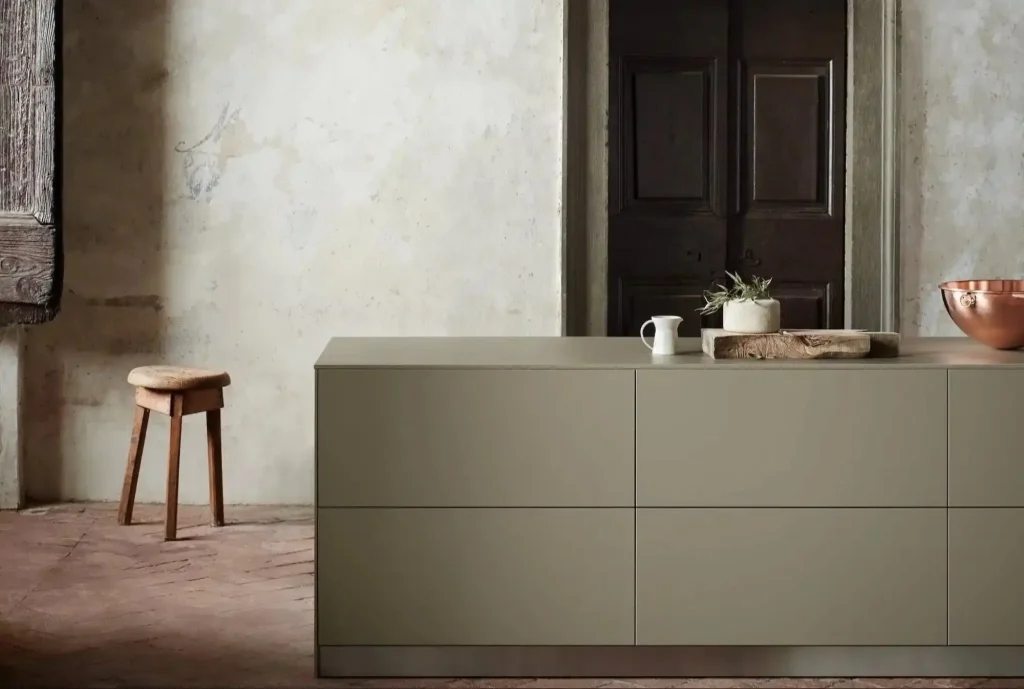
Beyond Form: A New Way of Thinking About Space
The way we conceive domestic space has been evolving toward greater clarity and precision. Where design once relied on formal expression and visual impact, it now favors a more restrained approach, where quality is defined by how a space is used and experienced over time.
The focus has shifted from composition to experience. From explicit intention to implicit coherence. The space is no longer designed to impress at first glance, but to support everyday life with consistency and ease.
It is within this framework that the concept of the effortless home emerges, an approach that prioritizes continuity, precision, and an intuitive relationship between architecture and its inhabitants.
An Architecture That Anticipates Movement
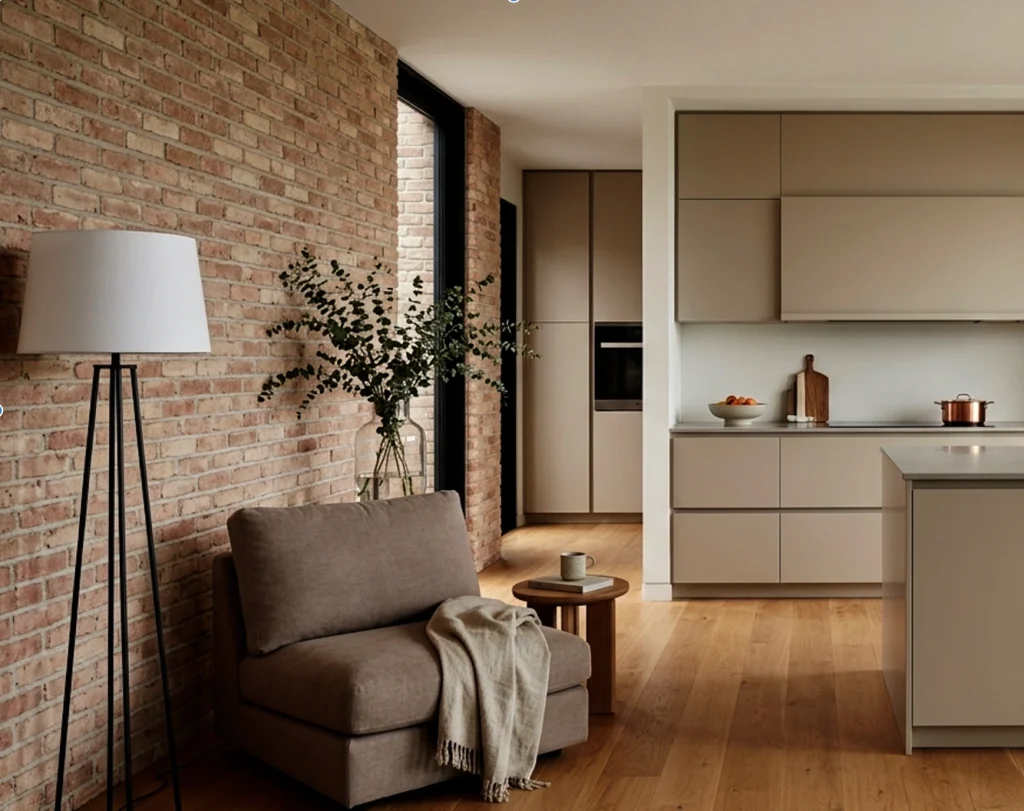
The effortless home is not defined by absence, but by the way each element is organized.
There is an underlying structure that guides the project. Decisions are not made solely for visual effect, but in response to use. Circulation, proximity between functions, and spatial relationships are carefully considered to remove resistance.
Actions become instinctive. Opening, moving through, and using the space no longer require conscious thought. The environment does not impose itself, it supports behavior.
This anticipation of use reflects a mature and highly resolved design process.
Continuity as a Spatial Strategy
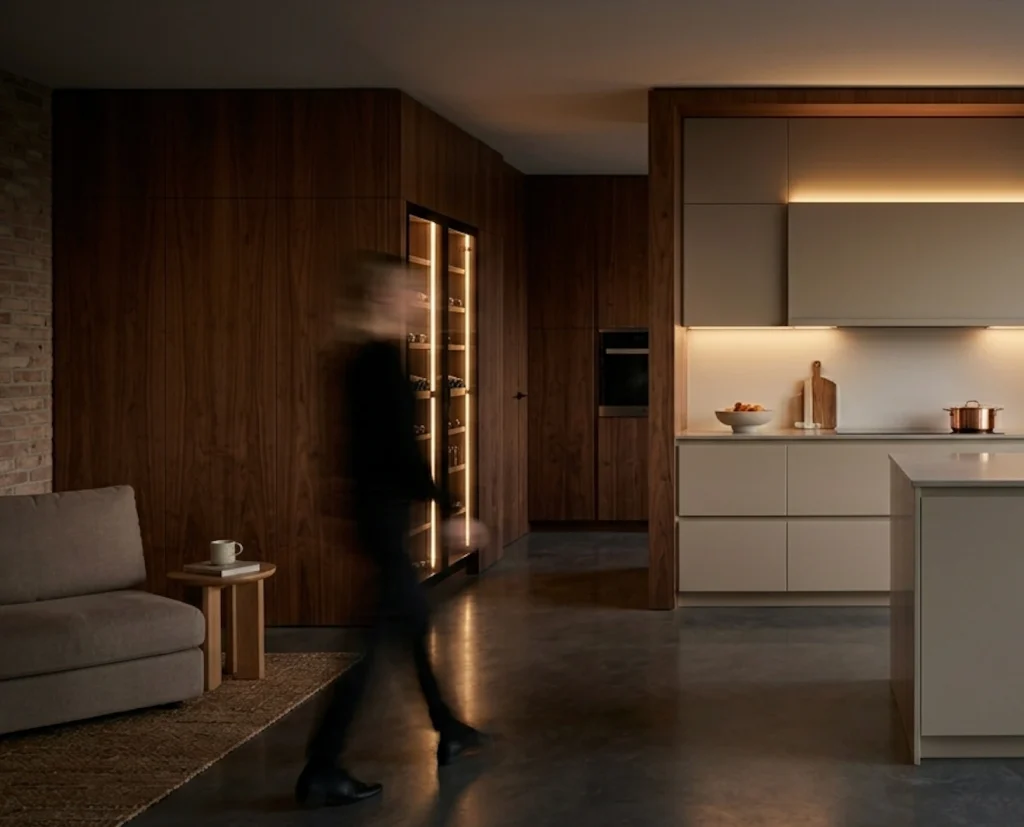
Contemporary space moves away from fragmentation. Instead of a sequence of separate elements, it seeks continuity, allowing for a more fluid experience.
Surfaces are not interrupted by unnecessary detail. Transitions are carefully resolved to avoid visual or functional breaks. Hierarchy gives way to relationship.
This continuity does not imply uniformity, but coherence. Each material, surface, and junction contributes to a unified and stable spatial reading.
The Kitchen as an Extension of Architecture
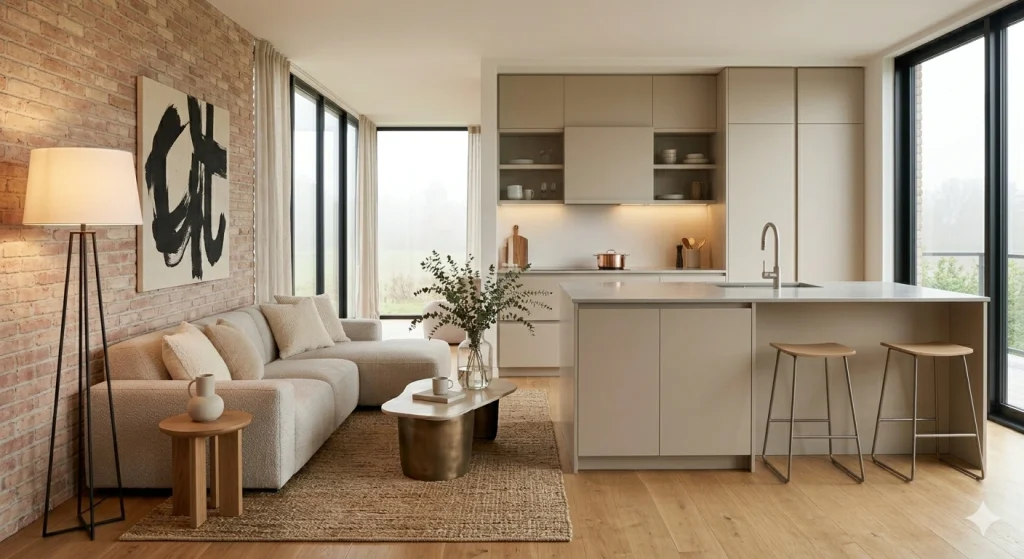
The kitchen is one of the clearest expressions of this approach.
No longer treated as a purely technical area, it becomes fully integrated into the architecture. Its presence is defined by its relationship to the surrounding space rather than by separation.
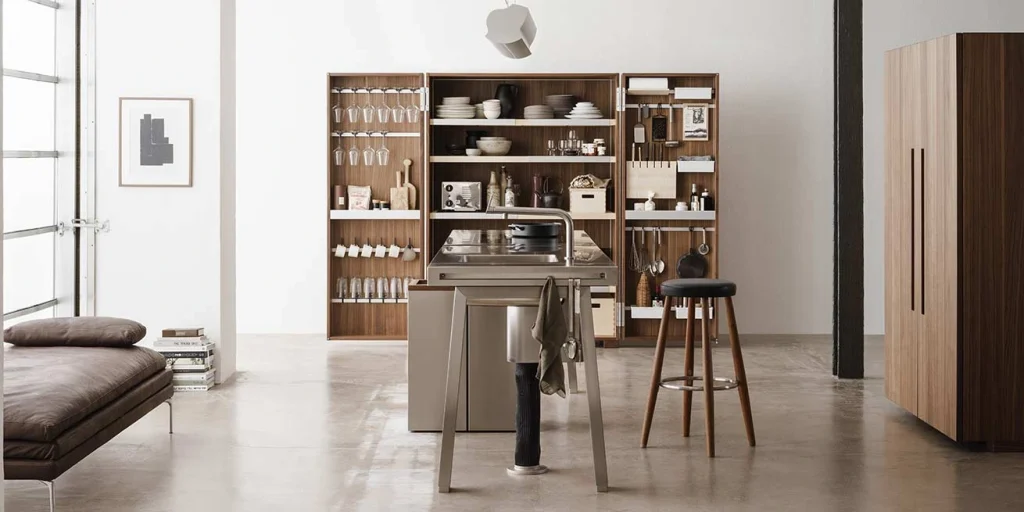
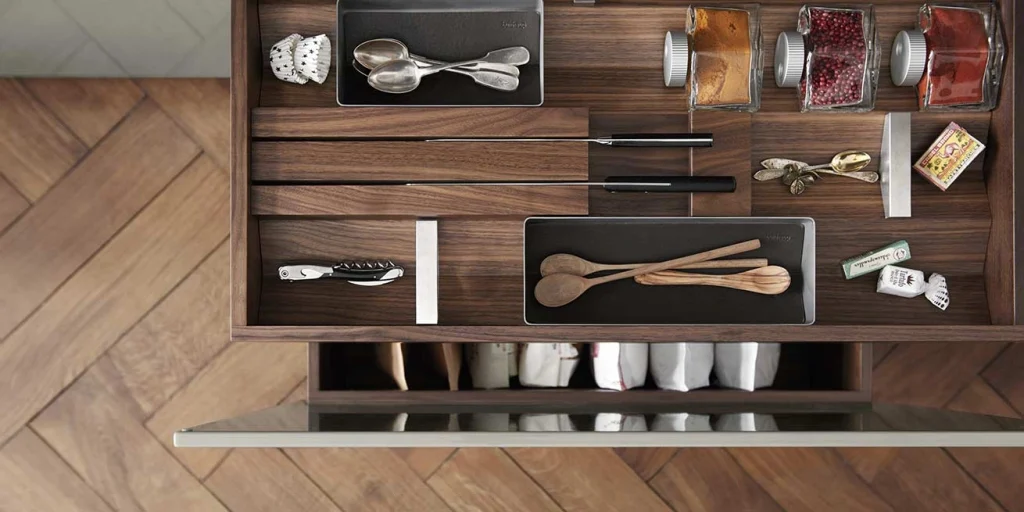
Systems such as those by bulthaup exemplify this integration. Kitchens are composed through precise volumes, refined proportions, and continuous surfaces that align with the architectural language of the space.
In this context, cooking does not interrupt living. It becomes part of the same spatial continuity.
Technology Reduced to Its Essence
Technology follows the same logic of integration.
Rather than asserting itself visually, it is conceived as a discreet layer that becomes apparent only when needed. Interfaces are simplified, control is precise, and visual presence is minimized.
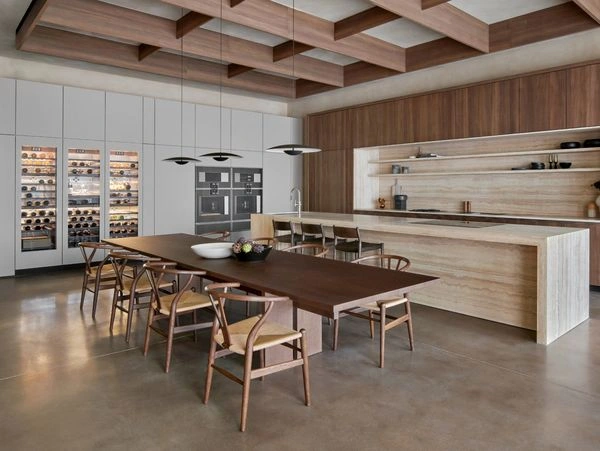
Appliances from Gaggenau illustrate this approach. Their design emphasizes functional clarity and aesthetic consistency, allowing technology to integrate seamlessly into the space.
The result is a more direct relationship between user and function, free from unnecessary mediation.
Systems That Structure Without Dividing
The way space is divided plays a critical role in its overall perception.
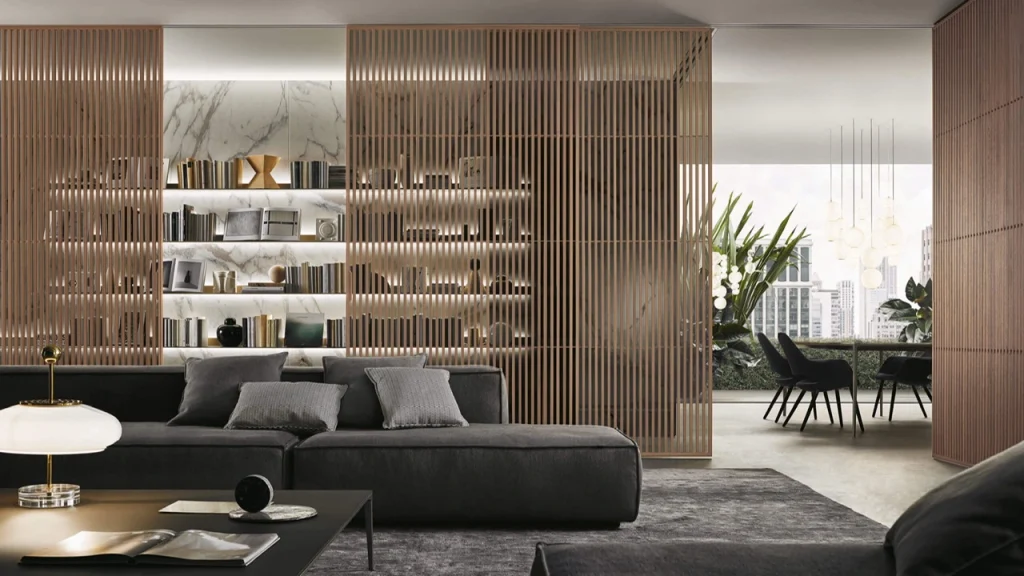
Doors, partitions, and storage systems are no longer treated as rigid separators. Instead, they function as elements of continuity, capable of transforming space without disrupting its unity.
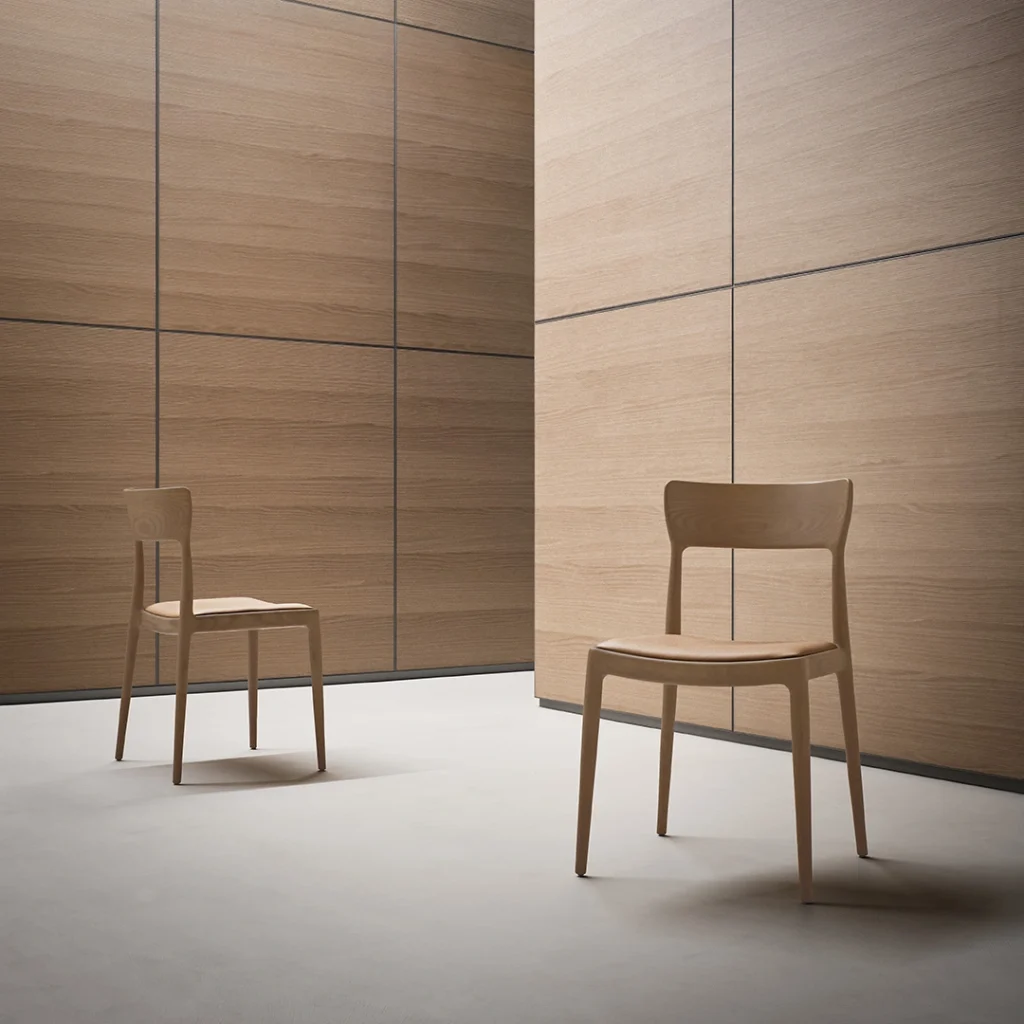
Rimadesio exemplifies this approach through sliding systems and aligned surfaces that enable flexible configurations while maintaining a coherent spatial reading.
Division becomes variation rather than interruption.
The Role of Furniture in Spatial Composition
In spaces defined by continuity and restraint, furniture takes on a more deliberate role.
Not as contrast, but as an extension of the architecture itself. Its presence should reinforce the overall atmosphere, contributing to coherence without introducing visual noise.
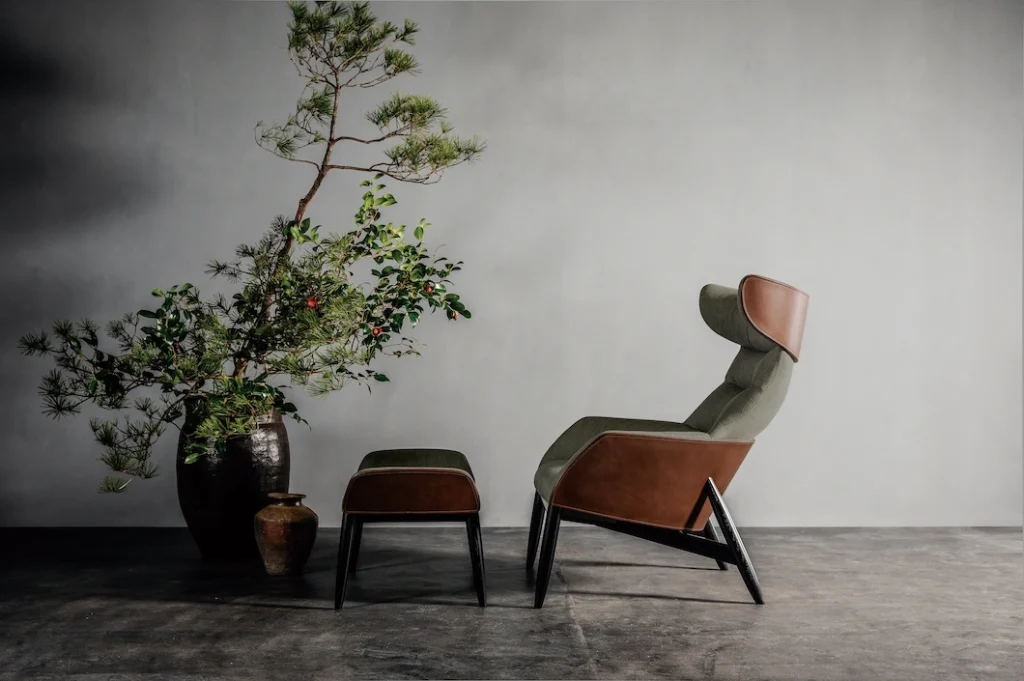
Brands such as Ritzwell embody this philosophy through pieces that emphasize proportion, materiality, and comfort. The design is understated, yet highly refined. The presence is quiet, yet essential.
Furniture becomes part of the spatial system rather than an isolated object.
Invisible Precision
The clarity of these spaces is the result of a highly rigorous design process.
Every alignment is intentional. Every material is selected in relation to others. Every junction contributes to the overall reading of the space.
What appears simple is, in fact, the result of careful control and refinement. Reduction is not simplification, but a process of precise decision-making.
It is at this level that a project achieves true consistency.
A Quality Revealed Over Time
The effortless home proposes a shift in perspective.
Rather than adding elements, it focuses on removing resistance. Rather than creating focal points, it prioritizes continuity. Rather than expressing solutions, it integrates them.
The space is no longer a collection of visible decisions, but a structure that supports everyday life in a consistent and intuitive way.
The effortless home proposes a shift in perspective.
Rather than adding elements, it focuses on removing resistance. Rather than creating focal points, it prioritizes continuity. Rather than expressing solutions, it integrates them.
The space is no longer a collection of visible decisions, but a structure that supports everyday life in a consistent and intuitive way.
Clarity, Continuity, and Precision
The way we design domestic space is moving toward greater restraint and rigor.
The effortless home does not depend on expressive gestures or demonstrative solutions. It is built on the precise articulation between architecture, technology, and furniture.
When this balance is achieved, the space no longer demands adaptation.
It simply works.
