
It is within this context that Gaggenau occupies a distinctive position. The German brand develops kitchen appliances with a strong relationship between technology, materials, precision and architecture, from ovens and cooktops to refrigeration systems, wine storage, ventilation and coffee machines. Its history dates back to 1683 and includes some important milestones in the evolution of the fitted kitchen, including the development of built-in solutions and, later, modular systems for domestic kitchens.
At Desenhabitado, we work with Gaggenau in the context of kitchen, architecture and interior design projects, supporting the selection of appliances from the planning stage through to installation. For those looking for Gaggenau in Portugal or a Gaggenau showroom in Lisbon, this experience provides an opportunity not only to discover the products through their technical specifications, but also to understand how they can be integrated into a real kitchen.
Gaggenau stands out for the way it treats appliances as an integral part of the space. Rather than considering each appliance as an isolated object, the different ranges make it possible to create a coherent composition between ovens, cooktops, ventilation, refrigeration, wine storage and the other elements of the kitchen.
This approach is particularly relevant in architecture and interior design projects, where the kitchen can either have a more discreet presence or, conversely, become one of the central elements of the space. There are solutions that are fully integrated into the cabinetry, stainless-steel appliances and modular systems that provide greater freedom of composition.
The current range includes different product families, including ovens, combi-steam ovens, induction and gas cooktops, ventilation systems, refrigerators and freezers, wine climate cabinets, coffee machines, drawers and dishwashers.
For a project, this means that the selection can be based on how the kitchen will actually be used: cooking every day, entertaining, working with different cooking methods, storing wine, prioritising a fully integrated aesthetic or creating a more visually prominent composition of appliances.
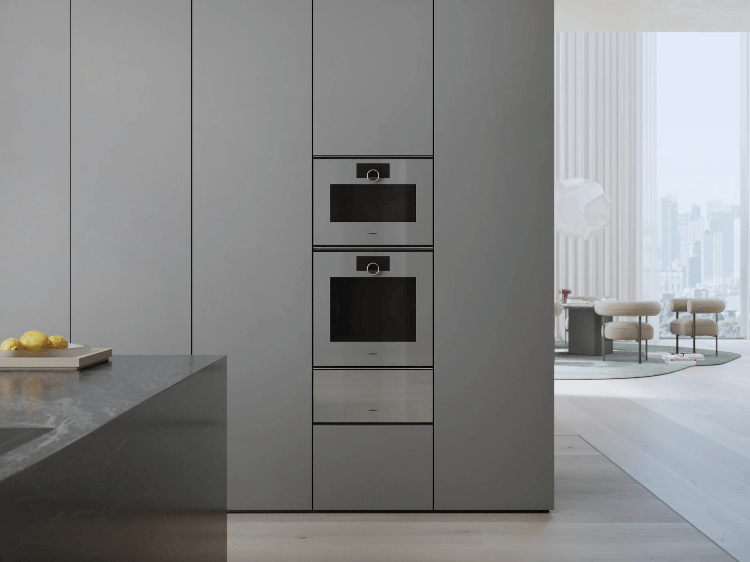
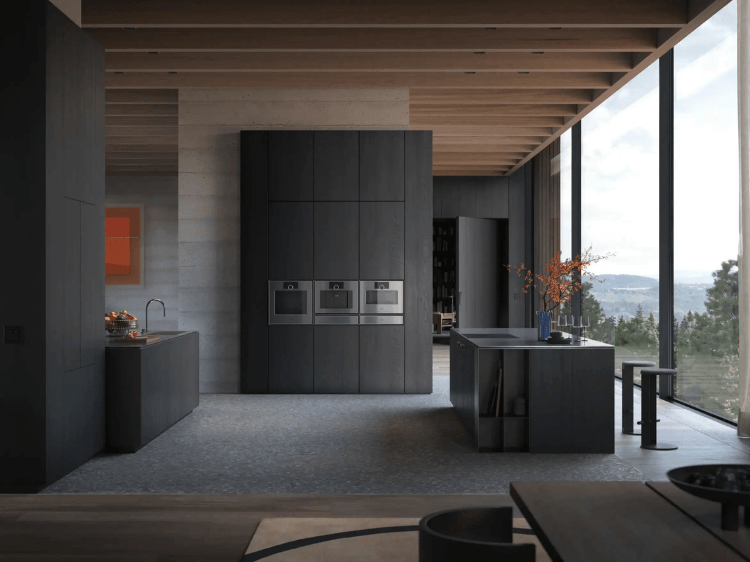
Ovens are one of Gaggenau’s most recognised categories and also one of the most important for understanding the brand’s philosophy. The current range includes conventional ovens, combi-steam ovens and combination microwave ovens, allowing different configurations to be created according to the project and the habits of those using the kitchen.
With combi-steam ovens, for example, it is possible to combine humidity, heat and grilling, using different cooking methods within the same appliance. The range includes models in widths of 60 and 76 cm and can use either a fixed water connection or water tanks, depending on the appliance selected. Automatic cleaning programmes also make it easier to maintain the stainless-steel interior.
Gaggenau’s oven solutions also include the renowned EB 333, a generously proportioned appliance that has become an icon within the brand, as well as the latest generations of the Expressive and Minimalist series.
Choosing a Gaggenau oven should therefore be based on the project rather than simply on the model. The available width, the need for steam, the type of door opening, desired cooking methods, oven position and relationship with other appliances are all aspects that should be defined during the kitchen planning process.
At Desenhabitado, this is one of the reasons why advice before purchase is particularly important: an oven is part of a larger system, and its characteristics should be considered together with the cabinetry and other appliances.
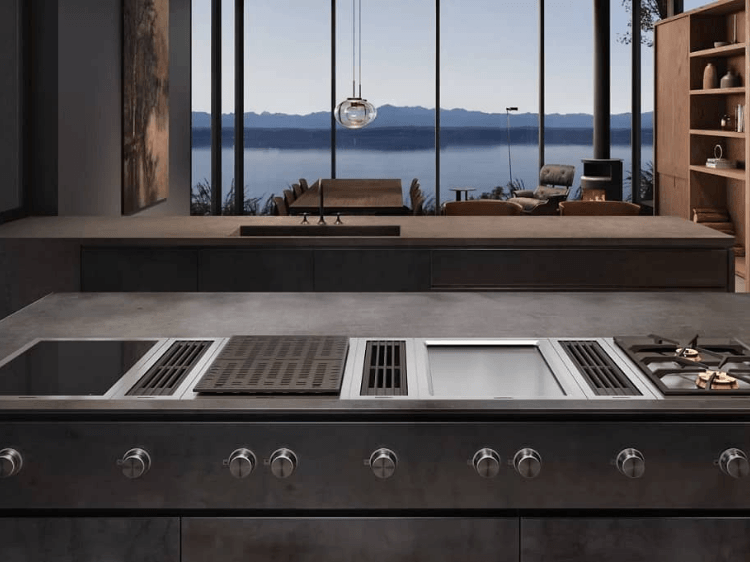
Gaggenau cooktops offer an equally flexible approach. The range includes induction, flex induction, gas and Vario modules, making it possible to create configurations adapted to the space and the way you cook.
In the 400 Series, Vario modules start at 38 cm and can be combined to create a customised cooking surface. Available options include induction, gas, wok, Teppan Yaki, grill and downdraft ventilation modules.
This modularity can be particularly interesting in larger kitchens or in projects where the cooking area is conceived as an independent composition. Alternatively, larger induction cooktops provide a more continuous surface and a cleaner visual appearance.
Gaggenau also offers solutions such as Essential Induction, which seeks to minimise the visual presence of the cooktop itself by integrating the technology into a continuous work surface. It is a particularly relevant solution for projects where the kitchen should maintain a minimalist appearance when not in use.
When choosing between a Gaggenau 200 Series cooktop, 400 Series cooktop or a Vario configuration, there is no universal answer. The decision depends on the size of the kitchen, how it will be used, its layout and the intended architectural language.
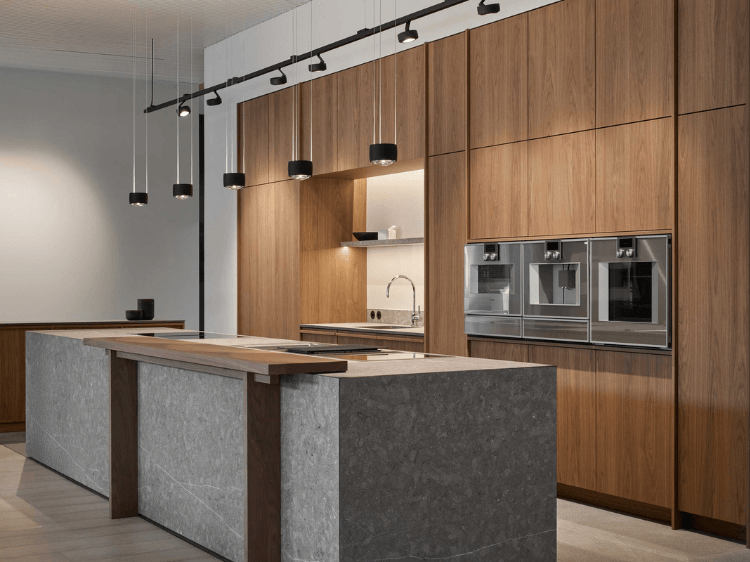
Refrigeration is another area where architectural integration takes on particular importance. Gaggenau offers refrigerators, freezers and refrigeration combinations in different configurations, including Vario solutions designed to be integrated into cabinetry.
In the 400 Series, Vario refrigeration systems can be combined to create a larger refrigeration wall. The appliances can feature stainless-steel finishes or be completely integrated behind cabinetry doors, allowing the refrigerator and freezer to visually disappear into the kitchen composition.
This option is particularly relevant in minimalist kitchens, where continuity between cabinet fronts is essential. Combining different modules also makes it possible to define refrigeration capacity according to the project rather than being limited by the dimensions of a single appliance.
The 200 Series also offers refrigerators, freezers, fridge-freezer combinations and integrated under-counter models, providing a broader range of possibilities for kitchens of different scales.
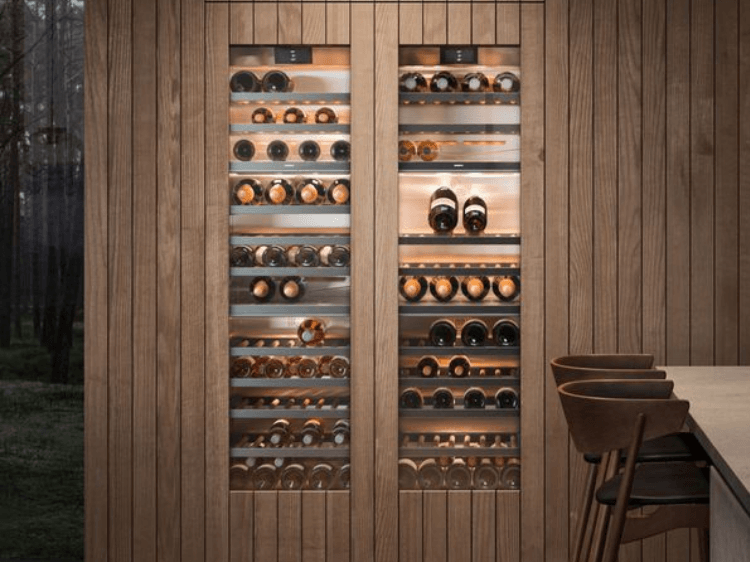
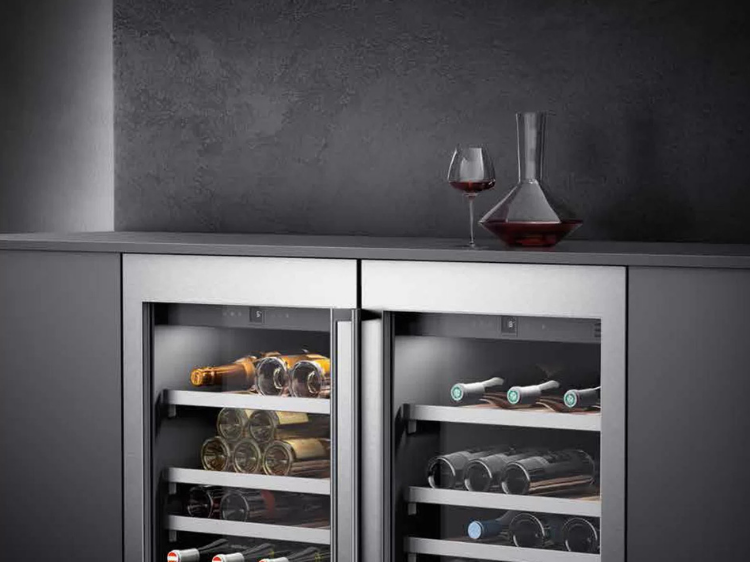
For those wishing to integrate wine storage into a kitchen project, Gaggenau offers Vario wine climate cabinets, including 400 Series solutions that can be combined with the other refrigeration appliances.
These appliances are designed not simply to store bottles, but to control storage conditions. Vario 400 Series models can operate with up to three temperature zones between 5°C and 20°C, while lighting, extendable shelves and the possibility of integration into cabinetry allow the wine climate cabinet to be both functional and architectural.
In a kitchen project, this category should be considered from the outset. The position of the appliance, door opening, required ventilation and relationship with the rest of the refrigeration system are factors that directly influence the cabinetry design.
One of the most common questions when people begin researching Gaggenau is the difference between the 200 Series and the 400 Series.
The answer should not be reduced to a price comparison. The two series enable different approaches to a project and should be assessed according to the available space, the type of appliance required, the form of integration and the level of customisation needed.
The 400 Series has a stronger architectural presence and offers modular solutions that are particularly interesting for cooktops, refrigeration and other appliances. The 200 Series, in turn, offers a comprehensive selection of appliances that may be suitable for projects seeking more discreet integration or a different configuration.
For this reason, before choosing between the Gaggenau 200 Series and 400 Series, it is important to define the kitchen project first and select the appliances afterwards. At Desenhabitado, this analysis can be carried out together, taking into consideration the layout, cabinetry, available dimensions and intended use.
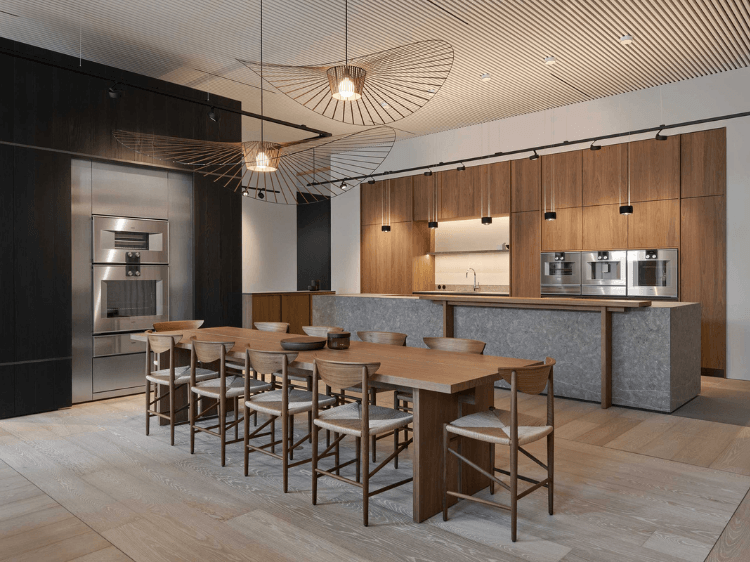
Choosing Gaggenau for a kitchen does not simply mean selecting several appliances from the same brand. The specification should consider how each appliance will be installed, the dimensions required, the necessary infrastructure and how the different elements will work together.
A combi-steam oven, for example, involves different decisions from a conventional oven. A cooktop with integrated ventilation has different requirements from a cooktop paired with a separate extractor hood. A Vario refrigeration system requires particular attention to dimensions and cabinetry integration. The same applies to a wine climate cabinet or built-in coffee machine.
This is why the design stage is fundamental. For architects, interior designers and private clients, addressing these issues in advance helps avoid incompatibilities during construction and ensures that Gaggenau appliances are correctly integrated into the kitchen.
Technical specifications are important, but certain aspects of an appliance can only truly be assessed through direct experience: the way an oven door opens, the feel of the controls, the size of a cooktop, the interior lighting of a refrigerator or the relationship between the materials and cabinetry.
Gaggenau itself highlights the importance of the showroom experience in understanding the qualities of its appliances.
For this reason, the Desenhabitado showroom in Lisbon is an important part of the Gaggenau experience. It provides an opportunity to see the appliances in context, discuss different configurations and understand which solutions are best suited to each project.
For those searching for Gaggenau Lisbon, a Gaggenau showroom in Portugal or where to buy Gaggenau, a visit can be the first step in turning online research into a concrete project decision.
Desenhabitado works on projects where the kitchen is conceived as an integral part of the architecture and interior. Our approach to Gaggenau begins with understanding the project before defining the appliances, advising on the different categories and configurations, preparing quotations and coordinating installation requirements.
Beyond the products themselves, this support is particularly important in architecture projects, renovations and bespoke kitchens, where decisions regarding appliances have a direct impact on cabinetry, infrastructure and the final result.
If you are developing a new kitchen, renovating an existing one or specifying Gaggenau for an architecture or interior design project, you can visit our showroom in Lisbon to discover the available solutions and speak with our team.
Where can I buy Gaggenau in Portugal?
Desenhabitado provides Gaggenau solutions for kitchen projects in Portugal and supports clients with the selection, specification and installation of appliances. To discover the products and discuss a project, you can visit the showroom in Lisbon.
Is there a Gaggenau showroom in Lisbon?
Desenhabitado has a space where you can discover and experience Gaggenau solutions. We recommend booking a visit in advance so that the team can prepare for your appointment according to your project and the appliances you are interested in.
How much does a Gaggenau appliance cost?
The price of a Gaggenau appliance depends on the model, series, dimensions, features and configuration selected. For kitchen projects, the final cost should also take accessories, integration and installation into account. To obtain a price tailored to your project, it is best to request a quotation.
What is the difference between Gaggenau 200 Series and 400 Series?
The 200 Series and 400 Series offer different design, configuration and integration solutions. The 400 Series stands out in particular for its modular approach and the strong architectural presence of certain categories, while the 200 Series offers a comprehensive selection of appliances for different types of kitchen. The choice should be based on the project rather than the series alone.
What are the main Gaggenau appliances?
Gaggenau offers a comprehensive range that includes ovens, combi-steam ovens, cooktops, extractors, refrigerators, freezers, wine climate cabinets, coffee machines, drawers and dishwashers, among other solutions.
Which is the best Gaggenau oven?
There is no single Gaggenau oven that is suitable for every project. The choice depends on the desired cooking methods, dimensions, need for steam, frequency of use and kitchen configuration. Combi-steam ovens are particularly versatile for those looking to combine different cooking methods in a single appliance.
Does Gaggenau offer induction cooktops?
Yes. The Gaggenau range includes induction cooktops, flex induction, full-surface induction and Vario solutions, as well as gas cooktops. Different dimensions and configurations are available, including solutions with integrated ventilation.
Does Gaggenau offer integrated refrigerators?
Yes. Gaggenau offers integrated refrigerators, freezers and fridge-freezer combinations, including Vario solutions. In the 400 Series, appliances can be integrated into the cabinetry or, in certain configurations, presented with a stainless-steel finish.
Does Gaggenau offer wine climate cabinets?
Yes. Vario 400 Series wine climate cabinets make it possible to create wine storage solutions integrated into the kitchen project, with different temperature zones and cabinetry integration options.
Does Desenhabitado handle the installation of Gaggenau appliances?
Installation should be considered from the design stage, as different appliances have specific requirements. Desenhabitado supports this aspect within the projects it undertakes, helping to ensure that the selected solutions are compatible with the cabinetry and the technical conditions of the project.
Can Gaggenau be specified for an architecture or interior design project?
Yes. Gaggenau is particularly well suited to projects where appliances are specified together with the architecture and cabinetry. Desenhabitado can support architects, interior designers and private clients in selecting and specifying appliances according to the project.
Choosing Gaggenau is a decision that should be made with the project in front of you. Dimensions, cooking methods, cabinetry integration, ventilation, refrigeration and installation should all be considered as parts of the same system.
At Desenhabitado, we help turn that choice into a coherent kitchen solution, from appliance selection through to integration into the project.
Visit the Desenhabitado showroom in Lisbon or contact our team to discuss your Gaggenau project.