USM Haller Redefines Modularity in 2025

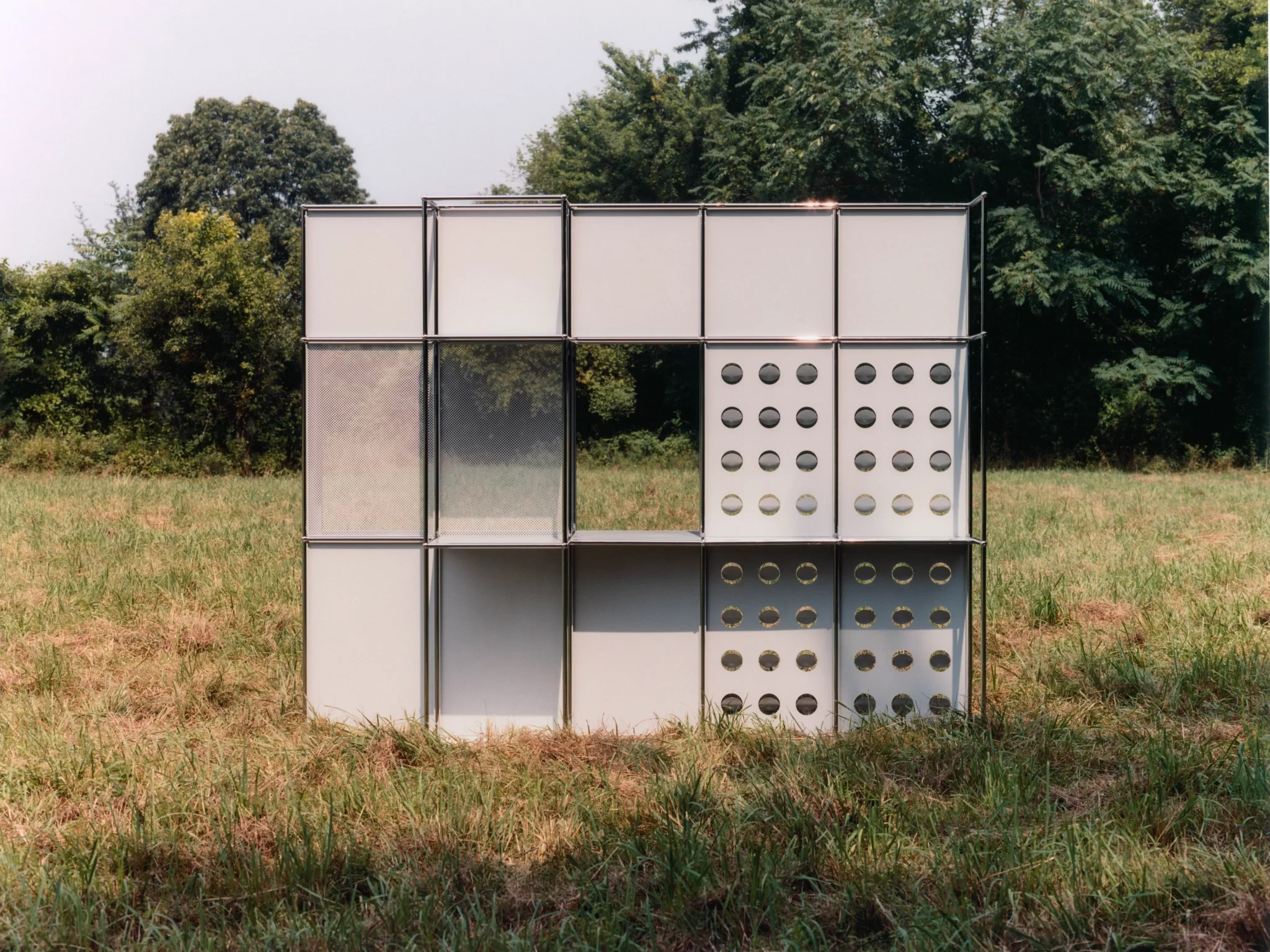
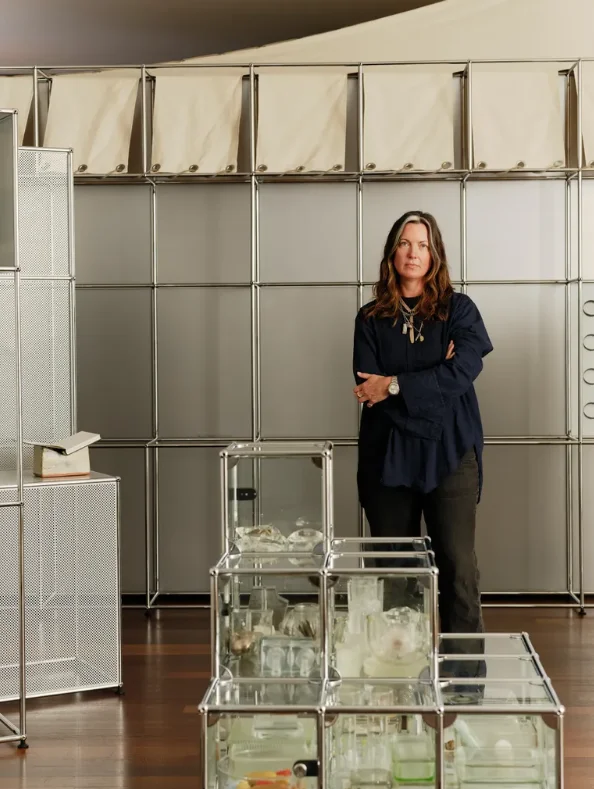
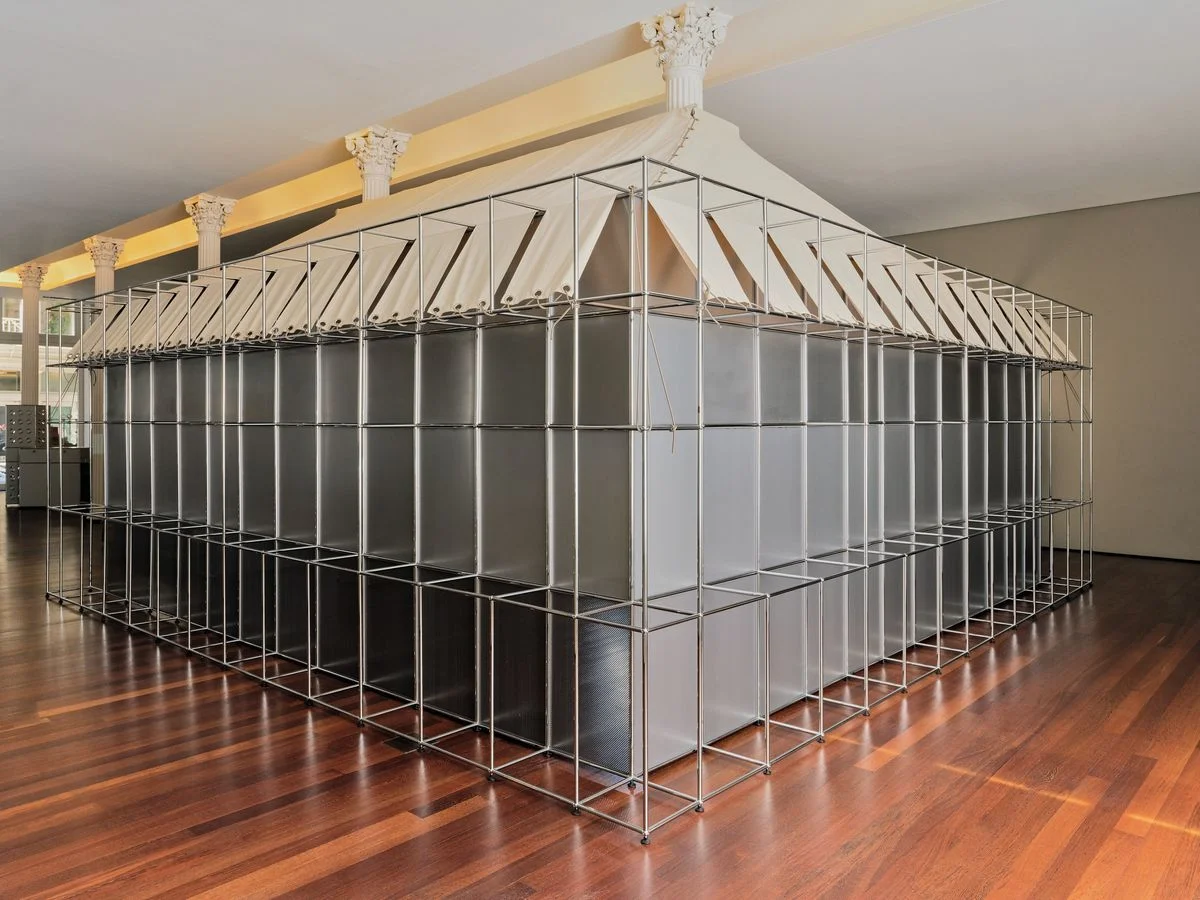
In September 2025, USM unveiled The Room You Carry at its SoHo showroom in New York, created in collaboration with the creative studio Loveisenough. The project transcends conventional furniture, reinterpreting USM Haller modules as performative architectural components: movable walls, inhabitable thresholds, and protective structures (Wallpaper*).
Furniture as Architectural Structure

The installation demonstrates the system’s potential to assume roles far beyond storage. The modules are configured into structural columns, vertical planes, and permeable volumes—acting as spatial membranes that can divide, protect, or reveal. In an era shaped by urban nomadism, compact living, and evolving domestic habits, this approach reframes furniture as a flexible housing infrastructure, dissolving the boundaries between architecture and equipment.

(Image credit: Marco Galloway)


Collaborations as an Expanded Formal Language

The Room You Carry forms part of USM’s ongoing cycle of curatorial experiments.
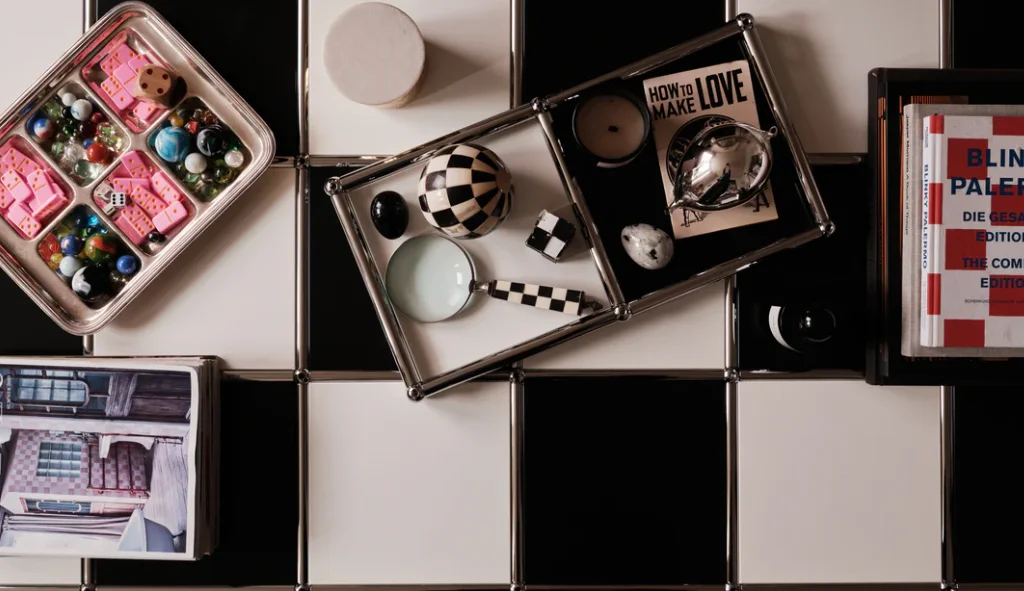
Earlier in 2025, the collaboration with Buchanan Studio introduced disruptive graphic and chromatic grammars to the modular system, reinterpreting its industrial sobriety with a playful, expressive sensibility (FT).

These collaborations operate as critical design essays: they preserve the system’s constructive integrity while expanding its visual repertoire, positioning Haller as both an architectural and artistic medium.


From Commercial Space to Residential Habitat

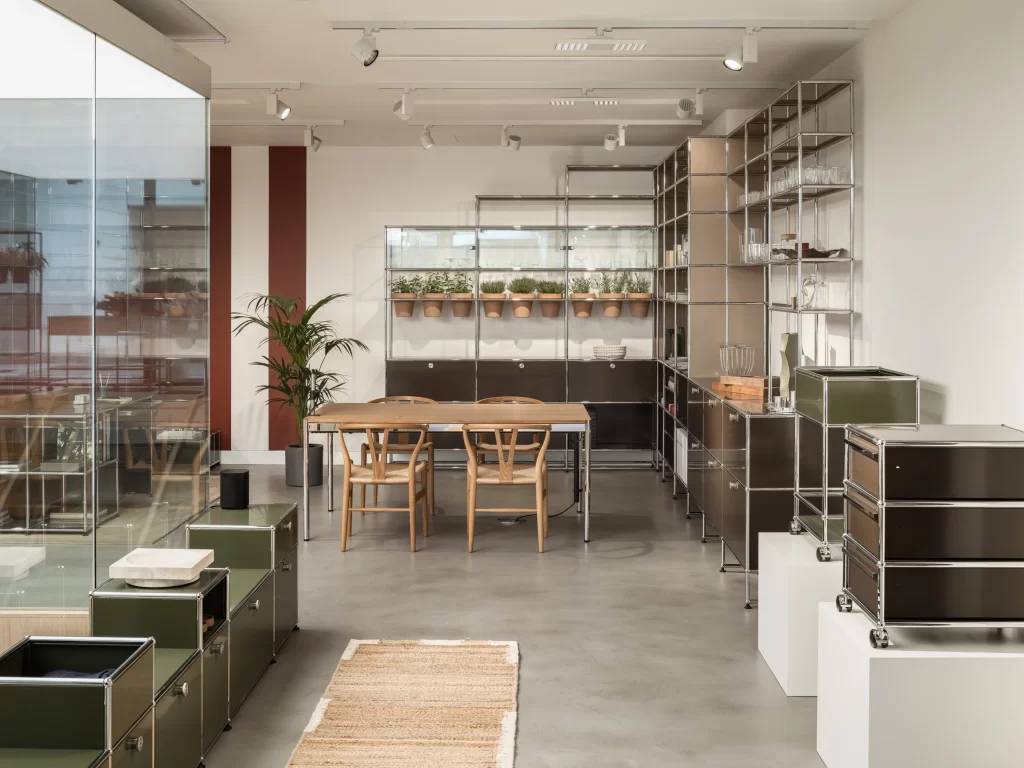
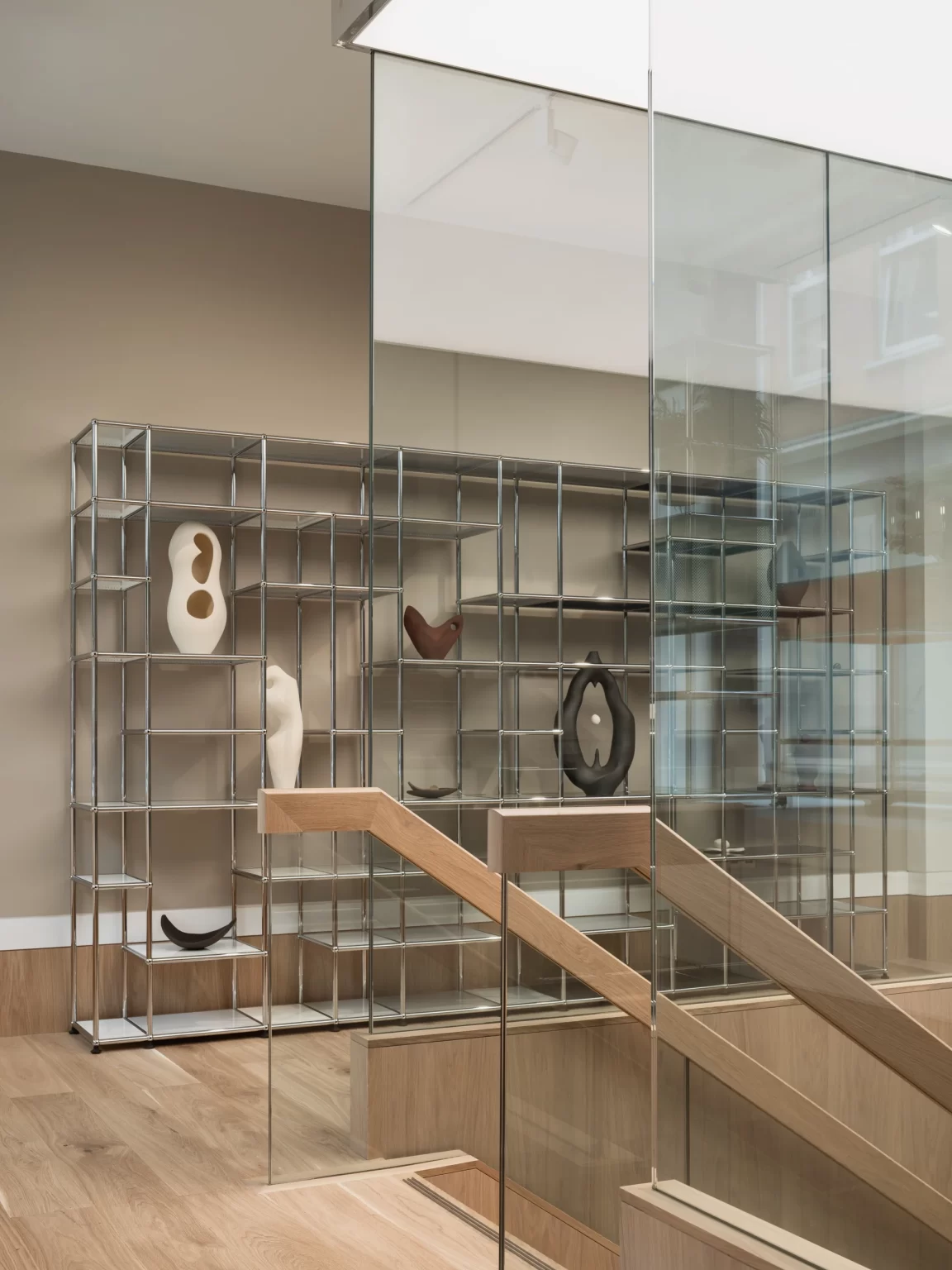
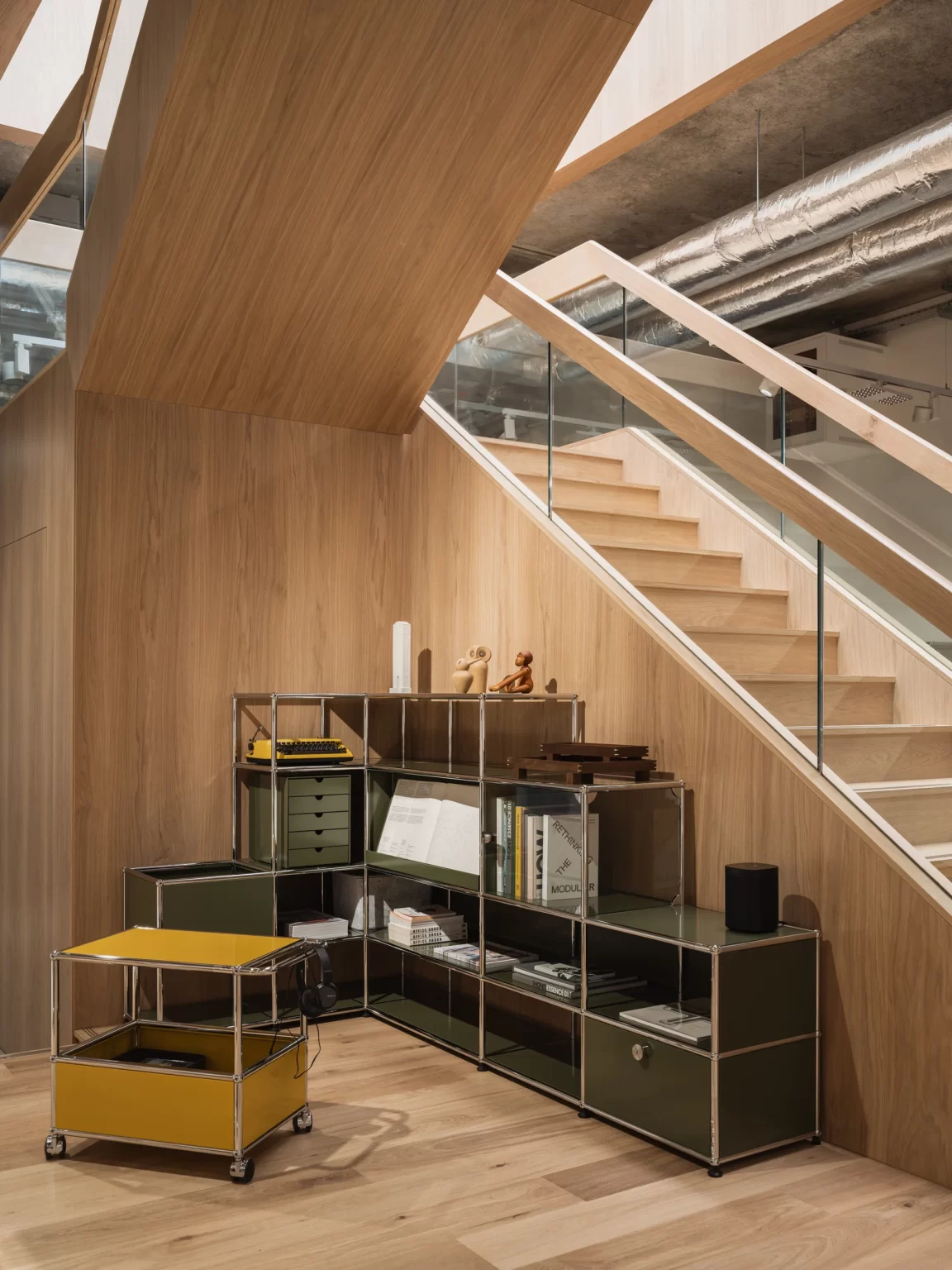
The opening of USM’s new Marylebone showroom in London in July 2025 further consolidated the strategy of repositioning Haller within the domestic context (Wallpaper*).
Conceived not as a mere gallery but as a livable environment, the showroom integrates kitchens, libraries, living areas, and entertainment spaces. It demonstrates how the system can function not only as practical furniture but as a central narrative element in residential spatial design.


Implications for Design Practice

For architects and interior designers, this shift opens new possibilities: partitions that double as acoustic buffers, shelving that diffuses light, modular walls that embed technology, projection systems, or even vertical greenery.

Haller is no longer just a storage solutio —it becomes an evolving architectural platform, capable of adapting to shifting programs and extending the life cycle of interior spaces.


Expressiveness Versus Structural Discipline

The expansion of Haller’s aesthetic vocabulary, while stimulating, raises critical questions. The brand is renowned for its structural rigor, visual consistency, and material longevity. More expressive collaborations risk diluting this clarity.
The challenge for designers lies in balancing formal boldness with technical discipline, ensuring the system continues to meet standards of durability, ergonomics, and architectural coherence.


The Future of Modularity as a Lived Experience

Through installations like The Room You Carry and showrooms designed as living laboratories, USM demonstrates that Haller is now more than modular furniture: it is spatial infrastructure, poetic shelter, and a tool for design experimentation.

At Desenhabitado, we see in this trajectory a clear source of inspiration: contemporary interiors must be responsive, narrative-driven, and adaptable—just like USM Haller, which proves that modularity can embody both discipline and emotion.