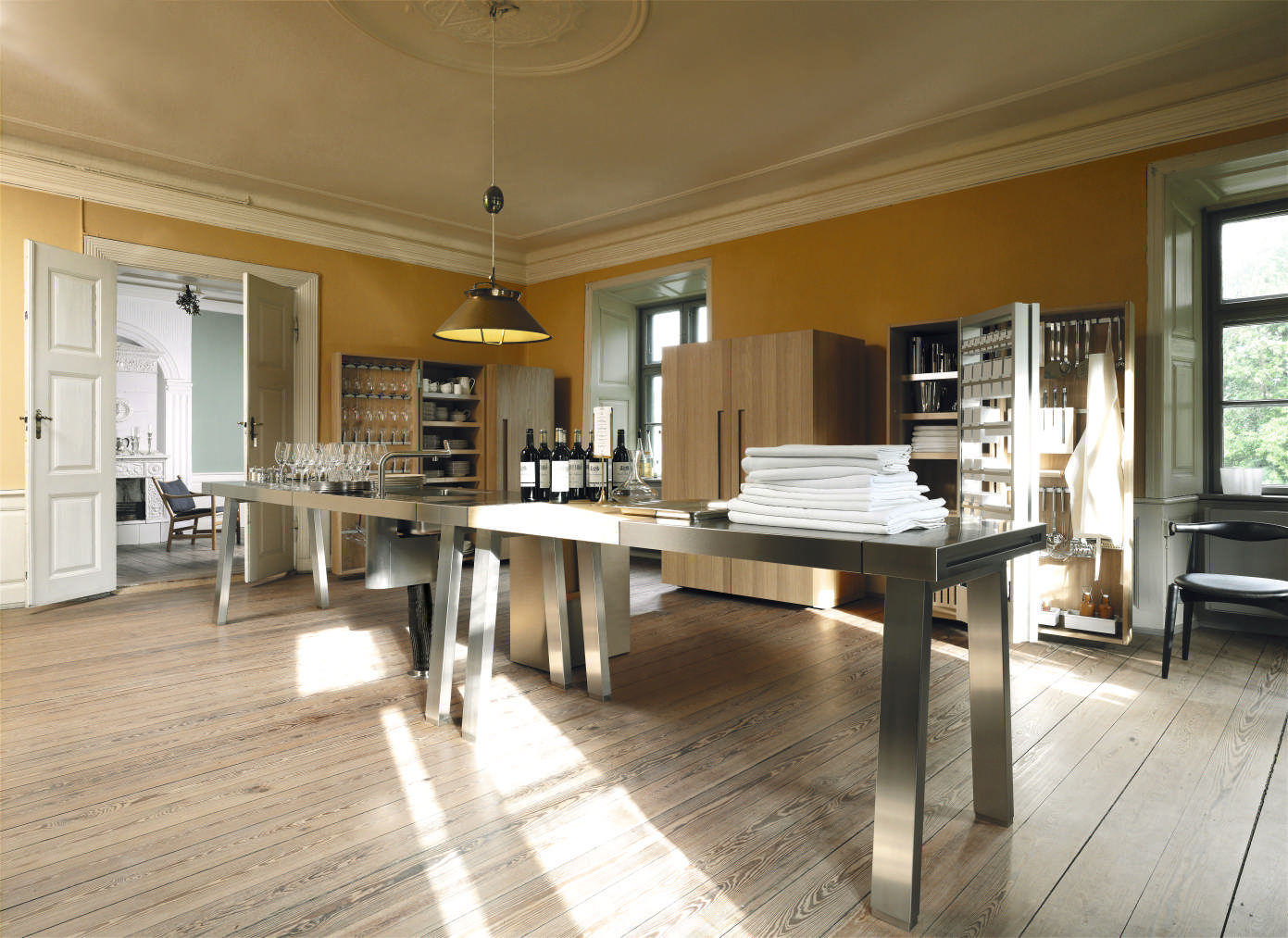
There is one design decision that can fundamentally transform the relationship between a kitchen and the home around it. It has nothing to do with the worktop material, the appliance brand or the colour of the cabinetry. It is about position.
When the kitchen is no longer anchored to a wall and instead occupies the centre of the room, it ceases to be simply a collection of functional elements. It becomes an architectural feature that shapes movement, defines space and changes the way people live together.
The bulthaup b2 was conceived precisely for this idea.
For decades, kitchens have been designed as a sequence of cabinets
arranged against a wall, an efficient solution shaped by an industrial logic
that prioritised the perimeter of the room.
The bulthaup b2 takes a different approach.
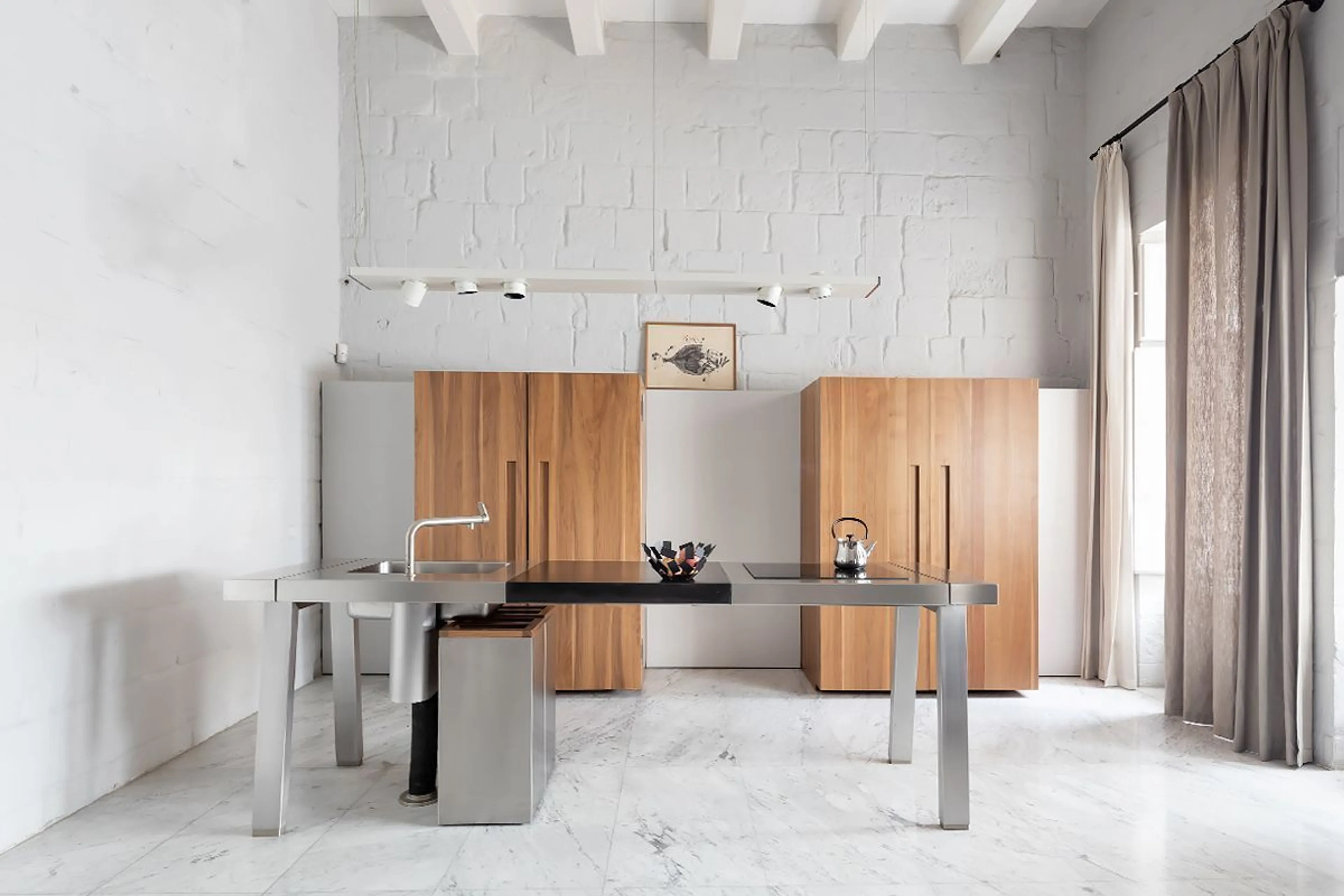
Its three core elements, the workbench, the tool cabinet and the
appliance cabinet, are freestanding pieces, positioned according to the
architecture of the home rather than fixed to it. Instead of covering a wall,
they define the space.
This fundamentally changes the way a project is conceived. Walls
remain free, natural light flows uninterrupted and the kitchen becomes an
architectural element rather than a technical installation.
For architects and interior designers, this represents a significant
shift. The kitchen is no longer a storage problem to solve against a wall, but
a spatial composition that contributes to the overall character of the home.
The concept behind the b2 is the result of years of collaboration
between bulthaup and Otl Aicher, one of the most influential European design
thinkers of the twentieth century.
By studying how people actually cook and inhabit their homes, Aicher
reached a simple conclusion: the wall-mounted kitchen is not a natural
solution. It is largely a convention inherited from modern industrial
production.
The b2 was created to challenge that convention.
Instead of organising the kitchen around the wall, it organises it
around people.
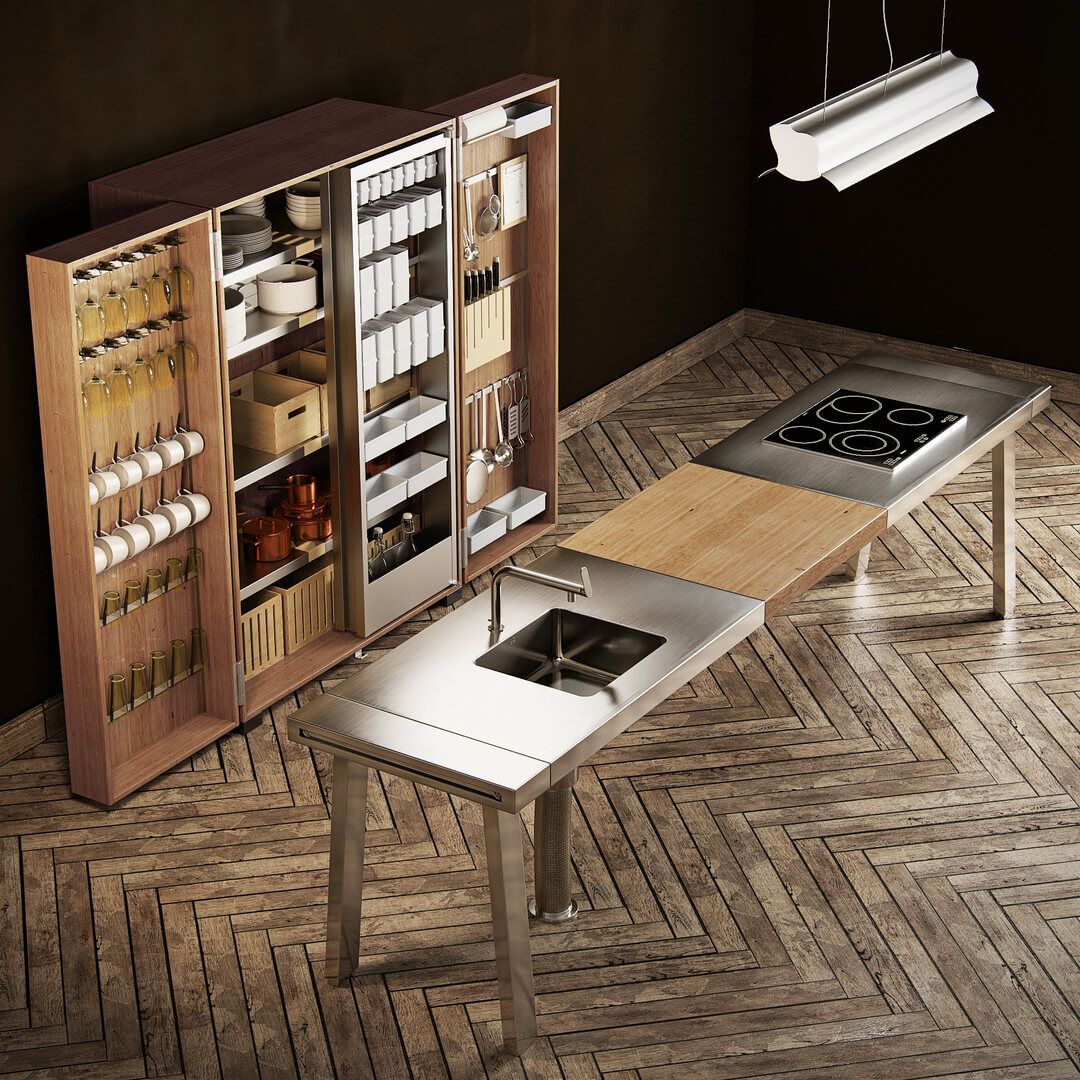
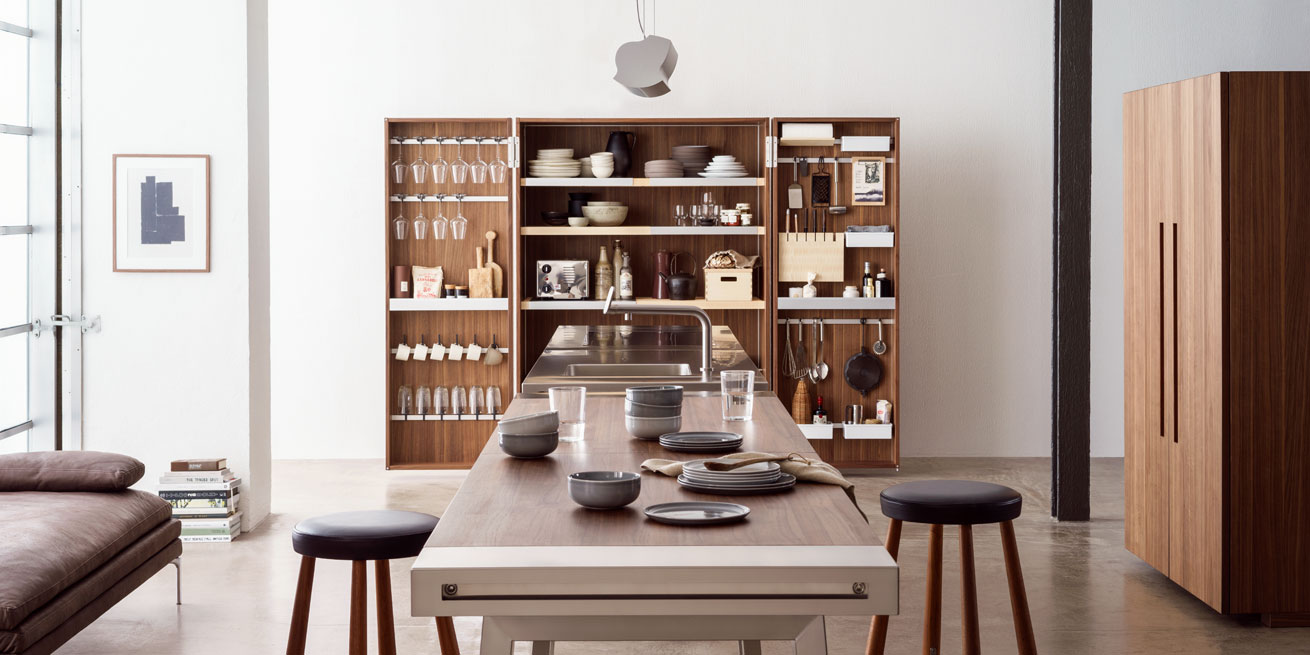
The bulthaup b2 consists of three independent elements that together
form what the brand calls the Kitchen Workshop.
At its centre is the Workbench, combining preparation, cooking
and washing into one continuous surface that can be accessed from every side.
It becomes both the functional heart of the kitchen and the natural gathering
point for family and guests.
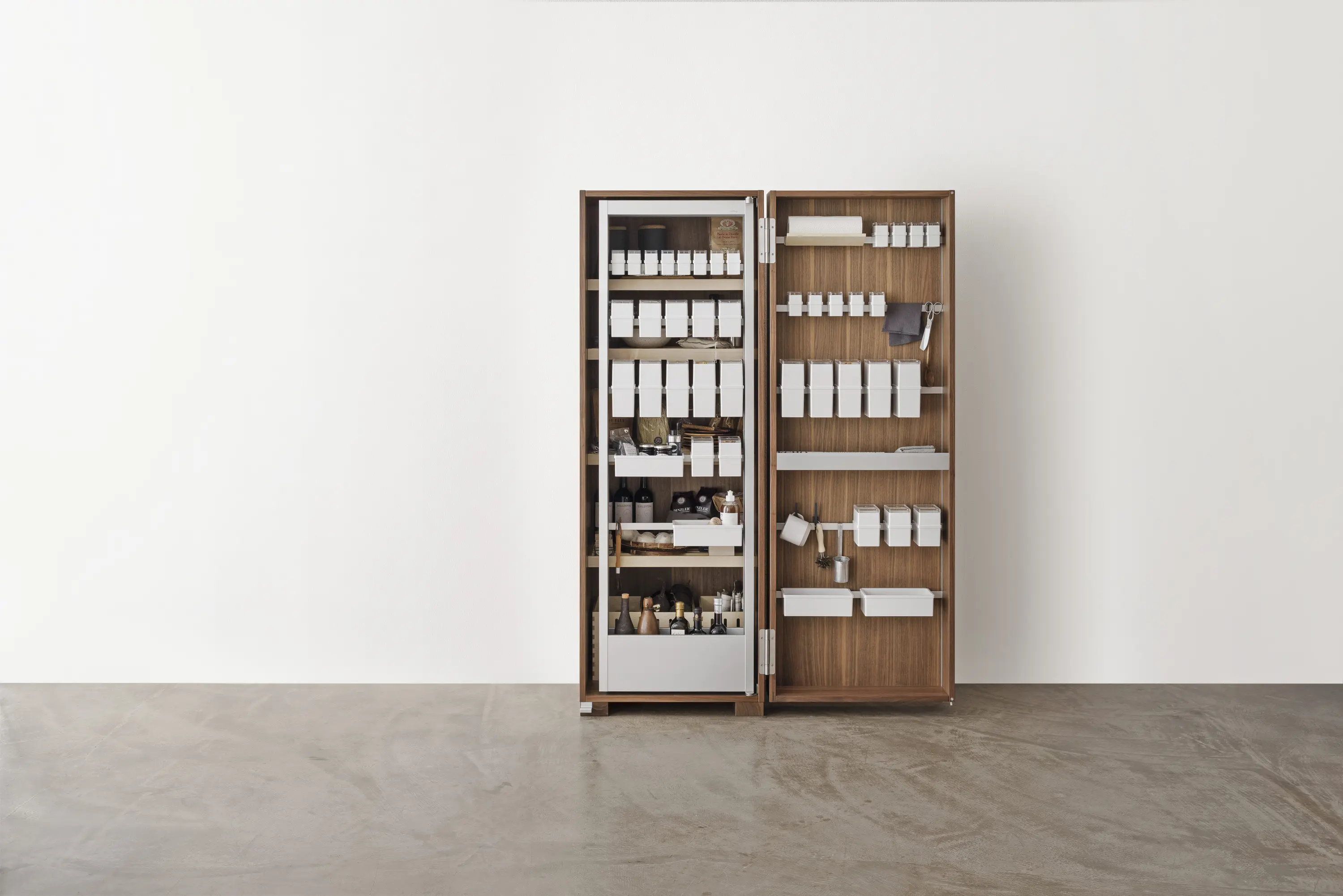
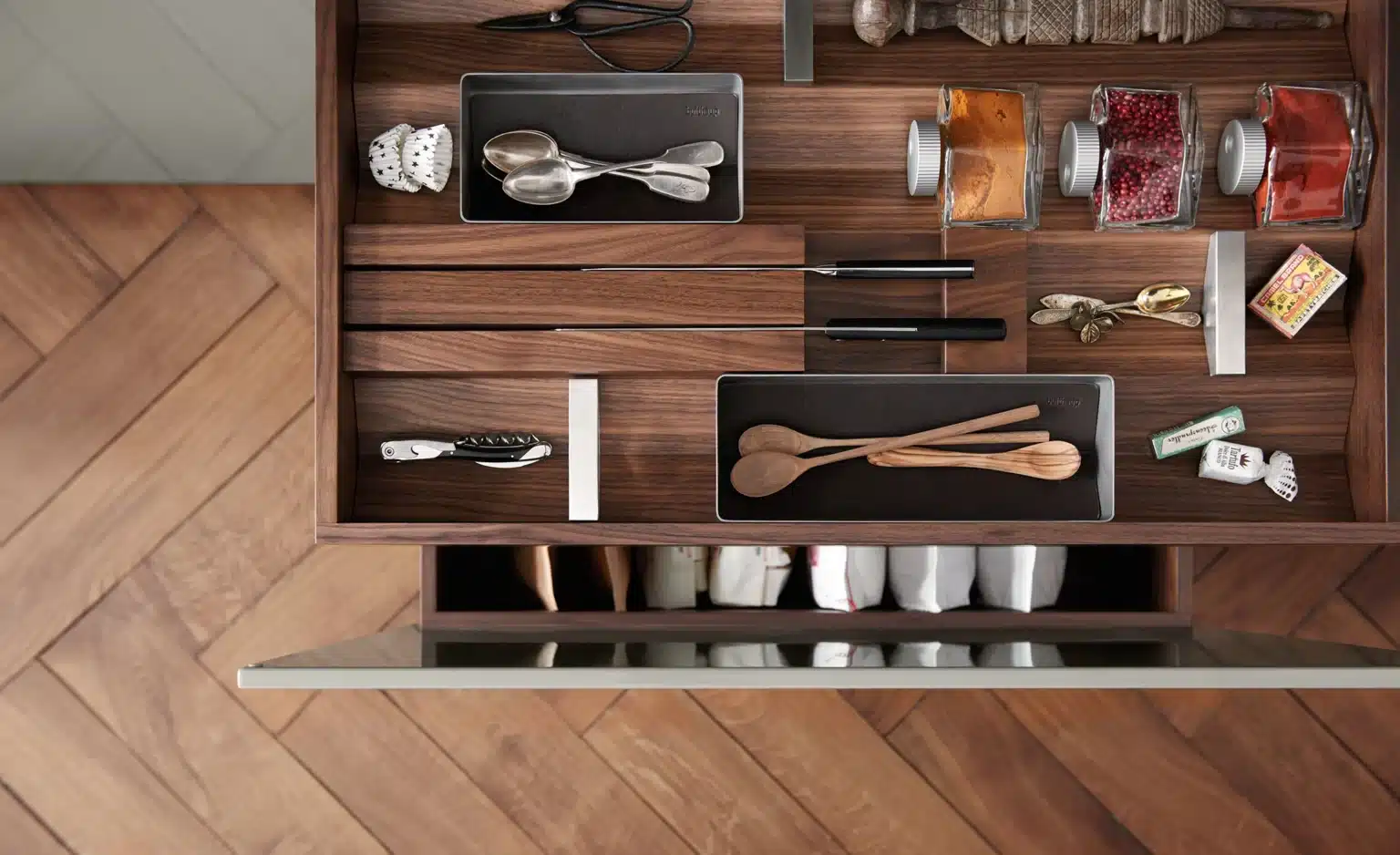
The Tool Cabinet stores cookware, tableware, utensils,
ingredients and spices in a single, highly organised unit. Open the doors and
everything is immediately visible; close them and it becomes a beautifully
crafted piece of furniture.
The Appliance Cabinet discreetly integrates the refrigerator,
oven and other appliances within a refined vertical volume, maintaining the
visual clarity of the space.
The three elements can be arranged in a straight line, an L-shaped
configuration or around a central island, adapting to the architecture rather
than dictating it.
The greatest transformation introduced by the b2 is not technical—it
is social.
In a conventional kitchen, the person preparing the meal often becomes
separated from everyone else. The linear layout creates a physical and social
boundary between cooking and living.
When the workbench occupies the centre of the room, that boundary
disappears.
Cooking becomes part of the conversation. Family and guests naturally
gather around the workbench, turning meal preparation into a shared experience
rather than an isolated task.
This social dimension was central to the work of EOOS, the
Vienna-based design studio behind the b2. Through their methodology, known as Poetical
Analysis, they observed that the most memorable moments happen when cooking
and living become part of the same experience.
The b2 does not force this behaviour.
It simply creates the architectural conditions for it to happen
naturally.
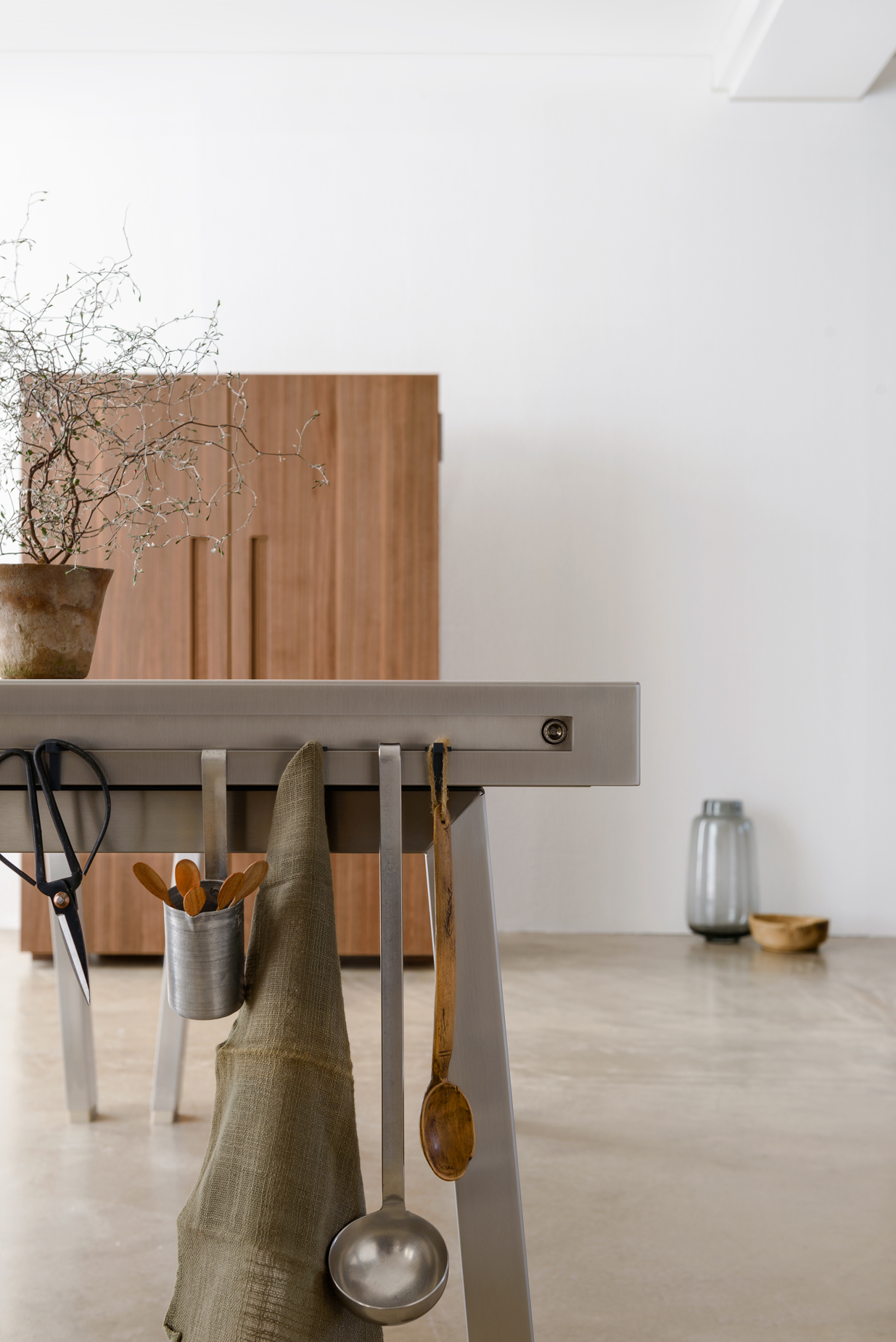
Material selection follows the same philosophy that defines everything
bulthaup creates: honesty, precision and permanence.
The brushed stainless steel worktop develops a distinctive patina
through everyday use, recording the life of the home rather than hiding it.
Solid oak gains richness and depth over time, while slate brings a quiet
mineral character that remains timeless.
Cabinets finished in oak or walnut veneer complete a restrained
palette designed to age gracefully rather than follow changing trends.
Introduced in 2008, the b2 remains as relevant today as when it was
first launched—not because it follows fashion, but because it is based on
enduring architectural principles.
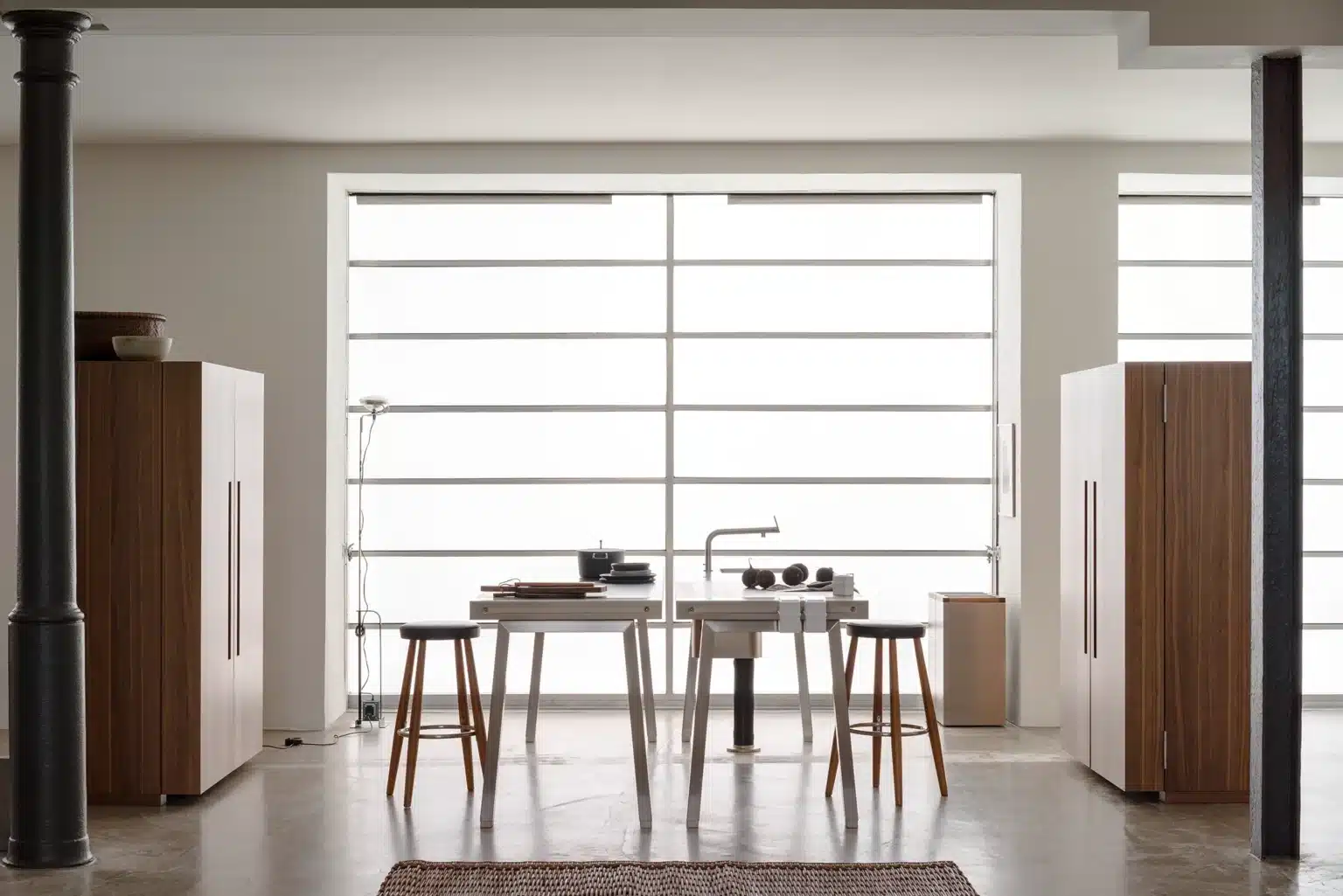
The bulthaup b2 reveals its full potential in homes where the kitchen
and living spaces are conceived as one continuous environment.
Whether in lofts, open-plan apartments or contemporary houses, it
integrates a fully equipped kitchen without compromising the architectural
clarity of the space.
It is equally valued by architects and interior designers looking to
preserve openness and visual balance, avoiding long walls of cabinetry that
dominate the room.
Above all, however, the b2 is for people who value longevity.
It is a kitchen designed to evolve with changing homes and changing
lives while remaining as relevant decades from now as it is today.
The bulthaup b2 can be experienced at the Desenhabitado showroom in
Lisbon.
More than photographs or technical specifications, a visit offers the
opportunity to understand what truly defines the system: the precision of every
detail, the quality of the materials and the way each element relates to the
surrounding architecture.
Some qualities can only be understood through experience.
The bulthaup b2 is one of them.